Panama Hacienda La Esmeralda
The Coffee That Changed Specialty Coffee
Some coffees are remembered for their flavor. Others are remembered for the way they changed an entire industry.
In the mountains of Boquete, Panama, a remarkable coffee emerged from Hacienda La Esmeralda’s Jaramillo farm. Its delicate floral fragrance, vibrant fruit character, and extraordinary complexity challenged expectations of what coffee could taste like.
That coffee was Geisha.
Today, Panama Geisha is among the most celebrated coffees in the world. Yet its rise to prominence was not the result of a carefully orchestrated luxury campaign. It began with a family, a farm, and the discovery of something exceptional growing among their coffee trees.
A Family Estate in the Highlands of Panama
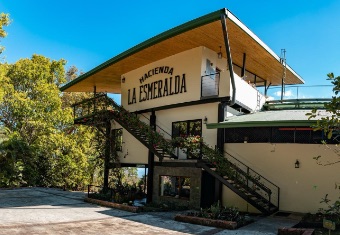
The story of Hacienda La Esmeralda is closely connected to the Peterson family, who acquired the original estate in 1967.
Located in the highlands of western Panama, the estate developed over the following decades as the family expanded its agricultural operations.
In 1997, the Petersons acquired the Jaramillo farm, situated on the slopes of Volcán Barú near Boquete.
At the time, Geisha was not yet the internationally celebrated coffee it would eventually become. Although the variety had been introduced to Central America decades earlier, its distinctive sensory qualities were not widely recognized.
Geisha’s journey began much earlier, with origins traced to Ethiopia. From there, coffee plant material traveled through research and agricultural networks before reaching Central America.
In Panama’s highlands, the variety found growing conditions that would help reveal its remarkable aromatic potential.
2004: A Defining Moment in Coffee History
In 2004, Hacienda La Esmeralda entered a Geisha coffee from its Jaramillo farm into the Best of Panama competition.
The coffee was unlike the entries many judges were accustomed to tasting.
Instead of the more familiar chocolate, nut, and caramel characteristics associated with many traditional coffee profiles, this Geisha presented an intensely floral fragrance, often compared to jasmine, alongside bright citrus-like acidity and remarkable clarity.
Its distinctive character attracted extraordinary attention.
Hacienda La Esmeralda won the competition, and the coffee subsequently achieved a record auction price for the event at the time.
The result helped establish Panama Geisha as a benchmark for exceptional specialty coffee and drew international attention to the possibilities of carefully cultivated, high-altitude coffee.
For coffee producers, roasters, and enthusiasts, it was an important reminder that coffee’s diversity extended far beyond the flavor profiles most people had come to expect.
Why Jaramillo Matters
Jaramillo occupies a special place in the story of Panama Geisha because it was the farm associated with Hacienda La Esmeralda’s breakthrough in 2004.
The farm’s mountainous environment, elevation, and local growing conditions contribute to the character of the coffee cultivated there.
The Jaramillo Natural Geisha featured here is described by the supplier as growing between 1,500 and 1,700 meters above sea level.
Elevation alone does not determine coffee quality. Temperature, rainfall, soil, shade, agricultural practices, harvesting, and processing all influence the final cup.
Nevertheless, suitable high-altitude environments can encourage slower cherry maturation, contributing to the development of complex sensory characteristics.
Combined with the Geisha variety’s naturally distinctive aromatic potential, these conditions help explain why coffees from Jaramillo have attracted such sustained interest.
Understanding the Geisha Variety
Geisha, also commonly spelled Gesha, is an Arabica coffee variety associated with Ethiopian origins.
Its reputation comes primarily from its exceptional aromatic qualities when cultivated and processed under suitable conditions.
Compared with many conventional coffee varieties, outstanding Geisha lots can display an unusually expressive floral character, accompanied by citrus, stone fruit, or tea-like qualities.
These characteristics are not guaranteed simply because a coffee carries the Geisha name.
The growing environment, agricultural management, ripeness at harvest, processing, roasting, and brewing all play important roles in determining how those qualities appear in the cup.
This is why the farm and producer matter just as much as the variety itself.
The Natural Process: A Different Expression of Geisha
One of the defining characteristics of this Jaramillo Geisha is its natural processing method.
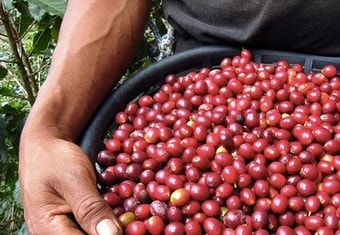
In natural processing, harvested coffee cherries are dried with the fruit surrounding the seeds. Once the cherries reach an appropriate moisture level, the dried fruit and parchment layers are removed during milling.
Throughout drying, careful management of moisture, airflow, temperature, and fermentation is essential.
When handled successfully, natural processing can produce coffees with pronounced fruit characteristics, enhanced perceptions of sweetness, and complex aromatics.
For a variety already celebrated for its floral expression, natural processing can create an intriguing relationship between delicate fragrance and ripe fruit character.
Rather than presenting only bright floral notes, a natural Geisha may offer additional layers of sweetness, depth, and texture.
Jasmine, Orange, Cherry, and Dried Figs
The supplier describes this Jaramillo Natural Geisha through four tasting notes: jasmine, orange, cherry, and dried figs.
Jasmine represents the delicate floral fragrance often associated with exceptional Geisha coffees. It can create an aromatic impression reminiscent of freshly brewed floral tea.
Orange suggests a lively citrus character, contributing brightness and freshness to the cup.
Cherry introduces an impression of ripe fruit, adding another dimension to the coffee’s perceived sweetness and acidity.
Dried figs suggest a deeper, concentrated fruit sweetness that may become more apparent as the coffee cools.
These descriptions do not mean that jasmine, orange, cherry, or figs have been added to the coffee.
They are sensory references used by coffee professionals to communicate the aromas and flavors naturally perceived during tasting.
Individual experiences may vary depending on roast development, brewing technique, water composition, and personal sensory perception.
Why Temperature Changes the Experience
One of the most rewarding ways to appreciate an expressive coffee is to observe how its character changes as it cools.
When freshly brewed, the aroma may be especially prominent, allowing floral and volatile aromatic compounds to become more noticeable.
As the temperature gradually decreases, different aspects of sweetness, acidity, and fruit character may become easier to distinguish.
This does not mean that the coffee develops entirely new flavors as it cools. Rather, temperature influences how our senses perceive its existing aromatic and taste compounds.
For a coffee with the complexity of a natural-processed Geisha, taking time between sips can reveal a more complete picture of its sensory character.
Brewing Geisha With Intention
There is no single correct way to prepare Geisha coffee. However, a carefully controlled pour-over is an excellent starting point for exploring its floral and fruit characteristics.
A clean brewing method using filtered water, freshly ground coffee, and a consistent pouring technique can help preserve clarity in the cup.
For an initial tasting, a starting ratio of approximately 1 gram of coffee to 16 grams of water is worth exploring.
For example, 15 grams of coffee brewed with 240 grams of water provides a useful reference point.
Grind size, water temperature, and extraction time can then be adjusted according to the roast profile and personal preference.
It is also worth tasting the coffee without milk or sweeteners initially, allowing its natural characteristics to be experienced without additional flavors.
Above all, pay attention to the aroma, the first impression, the finish, and the way the cup changes over time.
More Than a Famous Name
Hacienda La Esmeralda’s significance extends beyond the reputation of an individual coffee.
Its success helped encourage greater attention to coffee varieties, farm-level traceability, careful lot separation, and the relationship between growing conditions and cup quality.
It also demonstrated that distinctive sensory characteristics could command international recognition, influencing how producers and buyers approached exceptional coffees.
Over the following decades, Panama Geisha became closely associated with specialty coffee competitions, auctions, and the pursuit of increasingly refined sensory experiences.
Yet the most meaningful aspect of the story remains surprisingly simple.
A coffee variety that had once received relatively little attention revealed its extraordinary potential when grown in the right environment and evaluated with care.
A Coffee Worth Understanding
Not every coffee needs to be rare or internationally recognized to be enjoyable.
Some of the most satisfying cups come from familiar origins and everyday brewing rituals.
But occasionally, a coffee offers an opportunity to understand the diversity of the coffee world from a different perspective.
Hacienda La Esmeralda’s Jaramillo Geisha is one such example.
Its history connects the highlands of Panama with a defining moment in specialty coffee. Its variety reveals the remarkable aromatic potential of Arabica. And its natural processing offers another dimension to an already distinctive sensory profile.
It is a reminder that behind every exceptional cup are the decisions of growers, producers, processors, roasters, and the many people who help bring coffee from farm to table.
Sometimes, appreciating coffee begins simply by understanding its story.
Everyday Coffee Roasters — Discover the story behind every cup.
References
- Hacienda La Esmeralda — Producer information and estate history.
- Specialty Coffee Association of Panama — Best of Panama competition and Panama specialty coffee.
- World Coffee Research — Gesha (Panama) — Variety background and agricultural characteristics.